

Before you walk into the conference room, the courtroom, or the client meeting, you’ve already been judged. Not by your words. Not by your credentials. But by what people see.
Your professional presence is marketing you right now, whether you’ve chosen the message or not.
As women attorneys, we were trained to let our work speak for itself. Stay quiet. Blend in. Let the legal analysis win the day. But visibility isn’t vanity. It’s leadership. And the moment you understand what your professional presence is actually communicating, you get to take control of the narrative.
What Professional Presence Really Means for Women Attorneys
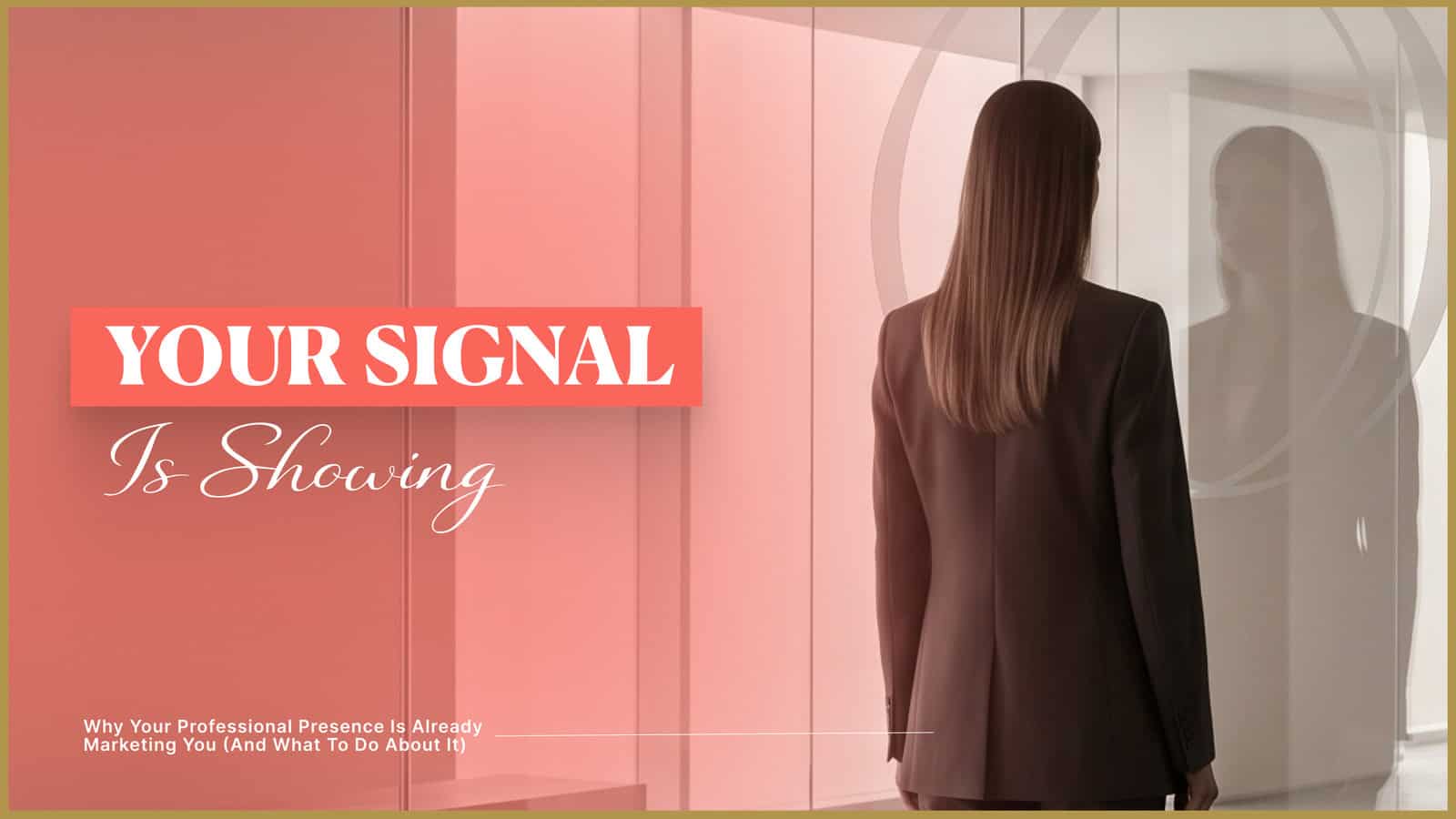
Your professional presence is the strategic alignment between who you are, what you’ve accomplished, and what people see.
Professional presence isn’t about looking expensive or trendy. It’s the strategic alignment between who you are, what you’ve accomplished, and what people see when they look at you. It’s the signal you send before you open your mouth.
For women attorneys, our signal matters more than most realize. We’re operating in an industry built on credibility, judgment, and trust. Clients need to believe we can win their case. Juries need to believe we understand the law. Partners need to believe we’re capable of leading. Every element of your professional presence either reinforces or undermines that belief.
The Three Signals Your Wardrobe Sends
Your clothing communicates three things simultaneously. Understanding each one gives you control over your presence.
Signal 1: Competence

Your style reflects your standards. Competence starts with what people see.
Competence is about polish, fit, and appropriateness. It says: “I know what I’m doing. I belong here.”
When your clothes fit poorly, look outdated, or don’t meet the unspoken dress code expectations, people unconsciously question your competence. That’s not a judgment about you. It’s how our brains work. We read visual signals as data. Misalignment creates cognitive dissonance.
For attorneys, our competence is non-negotiable. We’re asking people to trust us with their money, their property, their freedom. Our wardrobe should make that decision easier, not harder.
Signal 2: Authority
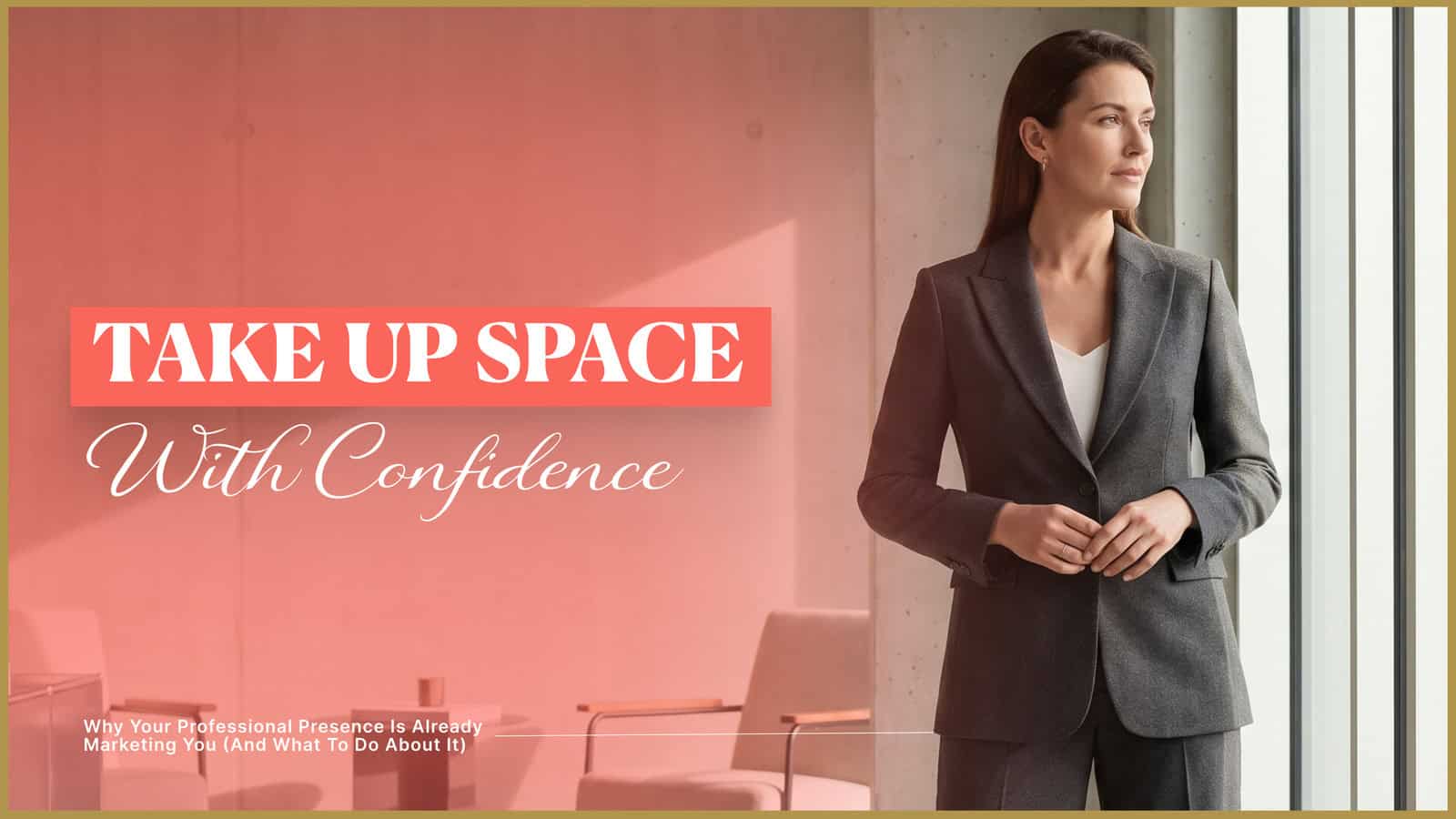
Authority means taking up space with confidence. It’s not aggressive — it’s strategic.
Authority is about presence, proportion, and intentional choices. It says: “I have something to say. Listen.”
So often, as women attorneys, we subconsciously minimize ourselves. We choose all black or safe colors. Nothing too bold. Nothing that might distract from the work. But authority requires visibility. It requires taking up space.
Authority doesn’t mean aggressive. It means strategic. It means understanding the tools at our disposal (color, proportion, texture, silhouette) and using them intentionally to command attention when we need it.
Signal 3: Approachability

People trust warm presence. Approachability and authority aren’t opposites.
Approachability is about relatability and humanity. It says: “You can trust me.”
This is where many women attorneys overcorrect. We soften everything to appear approachable. We’re more concerned with being liked rather than owning our leadership. But approachability and authority aren’t opposites. We can be both. It’s about finding the alignment that works for your role, your firm culture, and your audience.
Why Attorneys Specifically Struggle with This
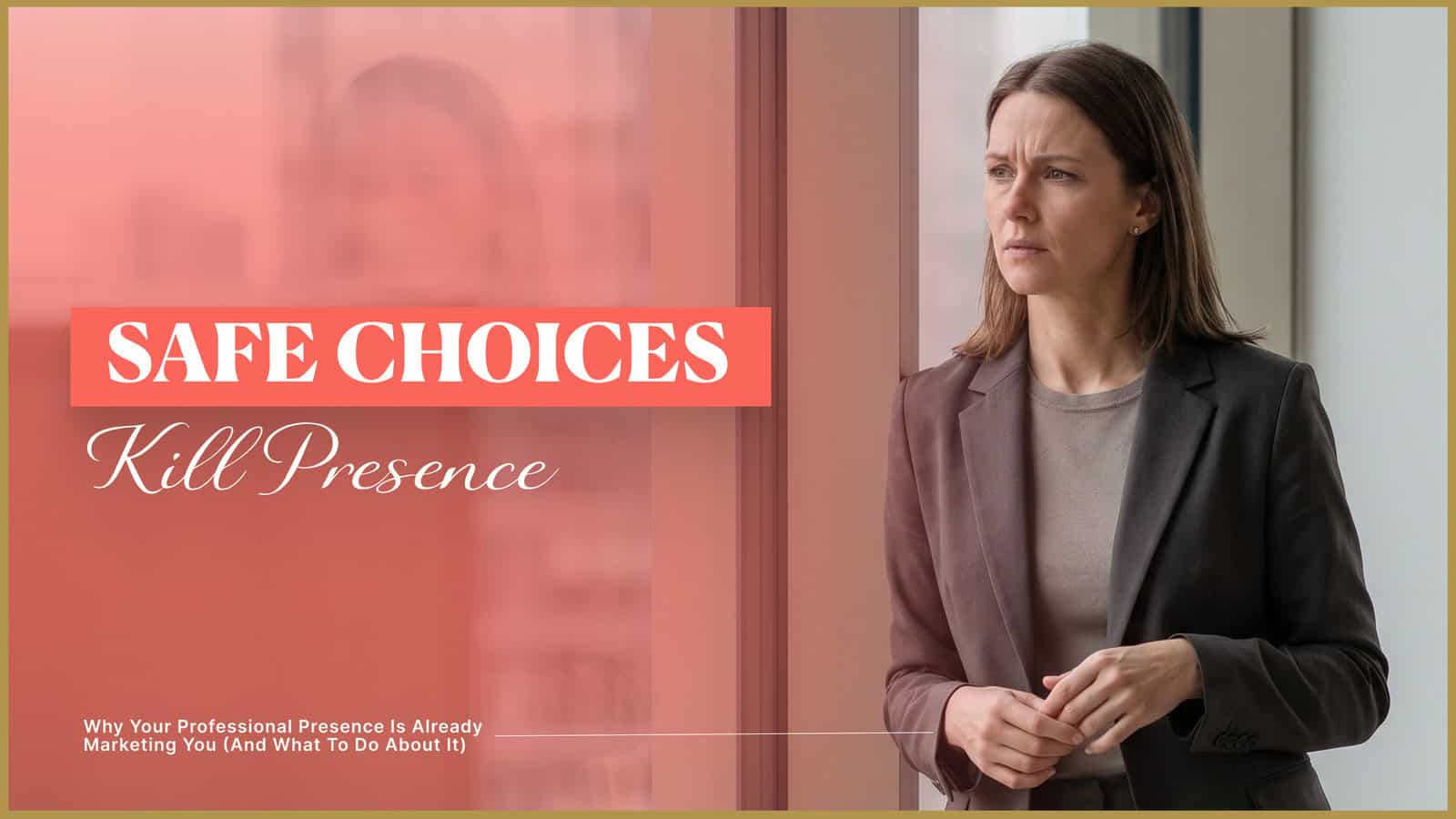
Safe choices kill presence. The rules that got you here won’t get you to the next level.
As lawyers, we’re trained to blend in. The law is the hero of the story. You’re the vehicle. For seven years, I practiced that way. For thirteen years in legal professional development, I reinforced it. Put your head down. Do good work. Let that speak.
But the rules that got you to partner don’t get you to the next level. When you start bringing in clients or stepping into a leadership role, the old training of “blend in” starts to fail you.
The work is often the same, but the role has changed. Your professional presence needs to evolve with it.
Most women attorneys never make that shift. We dress for the role we had, not the role we’ve earned. And then we wonder why people don’t see us as leaders.
A Real Client Transformation
“I want to look like a partner. Not like I just passed the bar.”
That’s what she told me during our first session. A successful law firm partner. Years of experience. A brilliant legal mind. But her wardrobe was still stuck in first-year associate mode.
Then her firm shifted to a relaxed business casual dress code, and the gap got even wider. She had suits for the courtroom and athleisure for the weekends. Nothing in between. No framework for showing up with authority when the old uniform no longer applied. She wasn’t underdressed because she didn’t care. She was stuck because no one had ever shown her what “business casual” looks like on a partner who still needs to command a room.
She wasn’t alone. So many high-achieving women climb the ladder but forget to bring their wardrobe with them. They feel younger than they are. Less authoritative than they’ve earned. Invisible in rooms they should own.

A real client transformation: from associate-level style to partner-level presence.
Here’s what changed everything. We ditched the boxy cardigan and replaced it with a structured blazer that defined her hourglass frame. We swapped mid-rise button-up jeans for high-waisted bootcut denim that highlighted her natural waist and elongated her legs. We chose dark denim over faded wash for an instantly more sophisticated look.
But the real shift wasn’t about the clothes. It was about her presence.
She told me: “Now when I walk into the room, I feel like the partner I am.”
It wasn’t just a wardrobe upgrade. It was an authority upgrade. Because when your clothes align with your role, everything changes. You show up differently. You speak with more conviction. You stop second-guessing yourself. And yes, you perform better, win more cases, and command the respect you’ve already earned.
This isn’t about trendy clothes. It’s about intentional choices. Dark denim can be just as powerful as a suit when styled strategically. The bootcut creates length. The blazer creates structure. The high waist creates proportion. Together, they create presence.
Your wardrobe should grow with your career. Not hold you back from it.
How to Take Control of the Message
Taking control of your professional presence means being intentional.
Start here: what role do you actually occupy right now? Not the title. The role. Are you the person clients come to for strategic advice? The rainmaker? The trial lawyer? The mentor?
Then ask: what does that role require you to communicate? What does your audience need to believe to trust you?
Finally: does your current wardrobe support that message?
Your professional presence isn’t something you build someday when you have time. You’re building it right now, with every outfit you choose, every meeting you walk into, every courtroom appearance you make.
The question isn’t whether you’re marketing yourself. You already are. The question is whether you’re in control of the message.

Ready to align your style with your role? Take the free Style Personality Quiz: Discover Your Attorney Signature Style
Or book a Style Discovery Call to discuss your wardrobe challenges: Book Your Style Discovery Call